

Trump's UFC Spectacle Isn't 'Idiocracy'. It's 'When We Were Kings'.
Bread, circuses, and concentration camps

At two minutes and fifty-eight seconds, in the eighth round, on October 30, 1974 Muhammad Ali knocked George Foreman out.
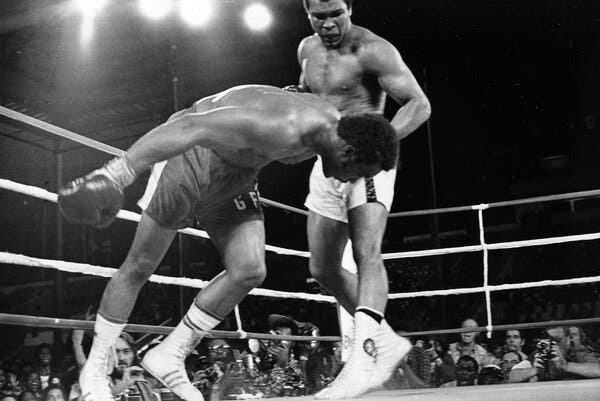
Sixty-thousand witnessed the upset in stadium, with an estimated quarter of the world’s four billion watching live on TV. Everyone ate: the fighters each took home $5 million; the producers, promoters, networks, and financiers reaped massive sums; music festival performing artists were paid handsomely; and the United States and Zaire scored massive PR wins.
Previously vilified as a draft-dodging revolutionary, in one instant Ali shocked the world and became the pride of two nations. While he was exhausting and ultimately trouncing Foreman with his innovative rope-a-dope, a dungeon buried deep beneath the ring held a thousand of Kinshasa’s most prominent criminals.
Before the fight, President Mobutu reportedly executed a hundred of the imprisoned to emphasize the importance of a crime-free spectacle. His reputation – and that of his consolidating dictatorship – were on the line. Mobutu had guaranteed a significant portion of Foreman and Ali’s unprecedentedly high fees. Luring the most anticipated sporting event of the century to Zaire was worth every penny.
While the smooth and successful “rumble in the jungle” buoyed Zaire and its leader on the global stage, living conditions in the former Belgian colony remained dire. After rising to power via military coup, Mobutu’s corruption and incompetence concentrated wealth while regular people starved. Propped up by the United States during the Cold War, he held onto the presidency until the 90s: the collapsed Soviet Union eroded Zaire’s geostrategic value and left Mobutu to largely fend for himself.
On May 23, 1997 Mobutu fled to Morocco where he would soon die. Sixty days before his ouster, When We Were Kings won the Academy Award for Best Documentary (Feature). It covers Ali’s rise to fame, the logistical and cultural leadup to the fight, the pre-fight music festival (a remarkable cultural event in its own right), Ali’s love affair with the people of Zaire, and the climactic title bout itself. After 22 years in production, When We Were Kings earned universal acclaim and endures as an all-timer of the genre.
The film focuses on an extraordinary figure at the center of a generational event with global political, economic, and cultural implications. The Blackness that is core to understanding Ali in American history is distinct, but inseparable from, his Blackness in Africa. The greatest athlete of his generation sacrificing everything to oppose colonialism emerges as a different kind of folk hero in colonial-ravaged Zaire. Here is our prophet, our hero, rehabilitating his image in corrupt symbiosis with an authoritarian leader laundering his own dark image.