

Steve Bannon's Conspiracy to Elect Tucker Carlson
Pulling back the curtain on the man behind Trump's rise

“Politics is show business for ugly people.” –Paul Begala.
With his partner James Carville, Paul Begala rose to prominence as an advisor to Bill Clinton’s innovative campaign for president in 1992. “Triangulation” was their fancy euphemism for moderate, establishing a blueprint for Democrats to embrace corporate and reactionary interests on the way to popular vote majorities.
While electorally potent, this strategy sent the Democrats down a thirty-year doom loop of concentrating wealth and power at the top, losing the trust and support of their base as a result, and pulling the country inexorably to the extremist right. As a result of this corrupt bargain, Democrats paved the way for Trump’s rise as much as the Republicans.
What happened to Begala? If you were politically attuned at the time, you probably remember an October 2004 spectacle on CNN’s Crossfire, a debate show for right-wing and left-wing pundits to performatively joust over the news of the day. Jon Stewart eviscerated the format and its hosts, went viral, and became a household name. Crossfire was canceled three months later. CNN retained one of its hosts – Begala – and fired the other: Tucker Carlson.
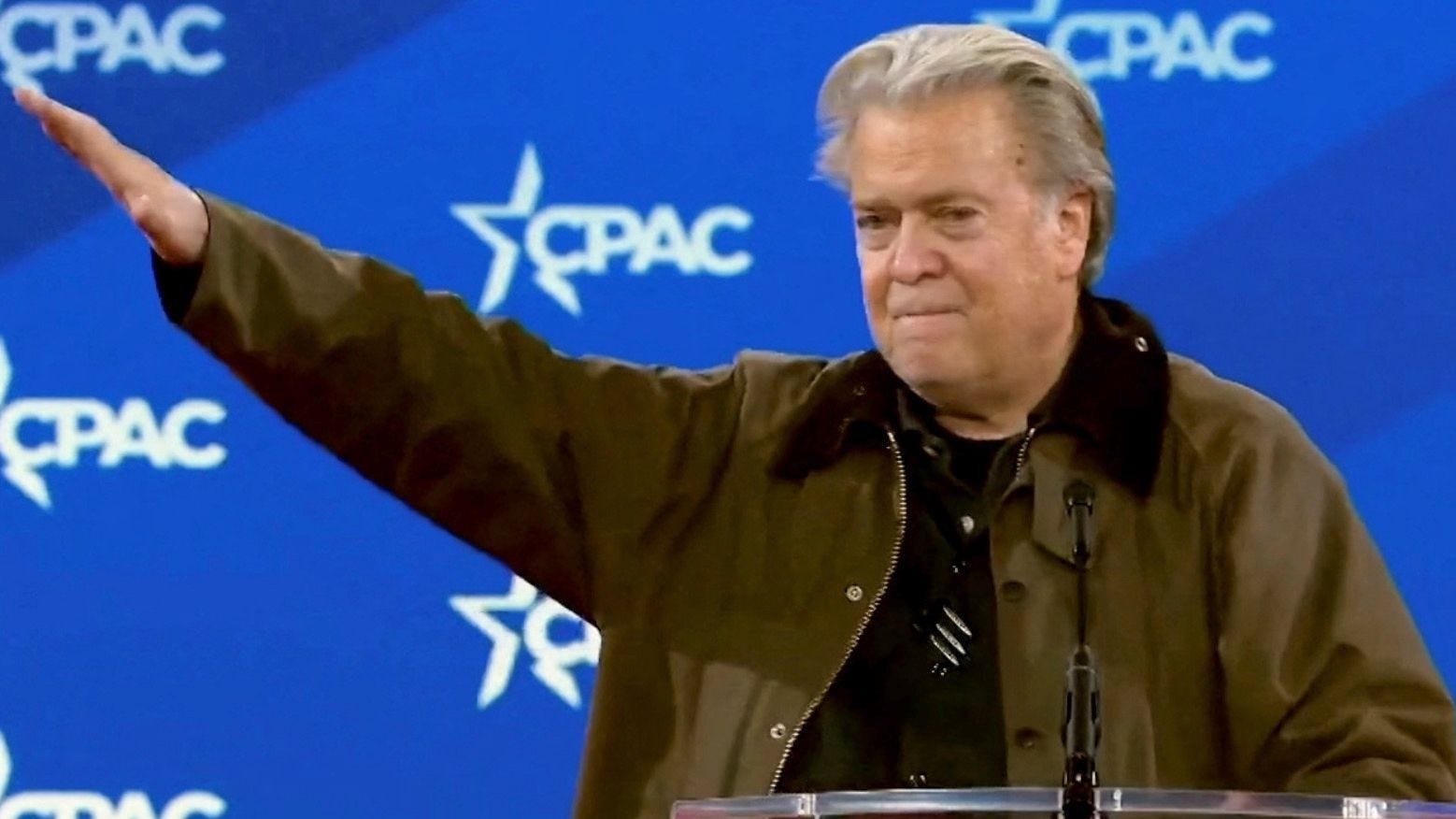
Carlson would ultimately rise to Stewart’s level of stardom, peaking as an ultra-conservative anchor on Fox News before being fired by the network in 2023. Republican strategist Steve Bannon told Politico: “Tucker was the mainstay of the populist voice over at Fox. With his departure, I don’t know why anybody needs to watch anything on the Murdoch empire.”
NBC News covered a Bannon appearance on the Charlie Kirk Show, in which “he said the ‘power of Tucker Carlson’ was his ability to distill and package fringe political ideas to a new audience. Bannon said Rupert and Lachlan Murdoch, the father and son who oversee Fox News’ parent company, fired Carlson to keep ‘those ideas [from] seeping into a more mainstream audience.’ ”
Bannon was right. When assessing the media landscape and the fluid tempers of the right-wing base, Bannon is usually right. In fact, Bannon is so in touch with the extremist avant garde he has led it as often as he’s merely analyzed it. For the past twenty years, Bannon has been the Forrest Gump of ascendant Republican radicalism:
